
Industrial environments have long grappled with the challenge of communicating hazards clearly and consistently to workers. In recent years, a wave of innovation has fundamentally reshaped how warning signage functions across warehouses, manufacturing plants and distribution centres. From intelligent digital displays to advanced materials with superior durability, the field of industrial safety signage is undergoing a transformation that is raising workplace safety standards to new heights.
At a glance
- The industrial safety signage market is experiencing significant growth, with a projected value of 1.7 billion US dollars by 2035 as facilities move away from unreliable traditional markings.
- Integration with the Internet of Things allows for smart signage systems that provide real-time, sensor-based alerts, such as automated projections when forklifts approach.
- Digital displays are replacing static signs, offering the flexibility to update safety messaging instantly as facility workflows or inventory layouts change.
- High-performance LED projections and advanced materials like weather-resistant plastics ensure superior visibility and durability compared to traditional tape or paint.
- Human-centred design and standardized color coding help workers instinctively identify hazards, reducing cognitive load and reaction times during critical situations.
- Regulatory frameworks and the move towards graphical symbols ensure that safety information remains universally understandable, regardless of a worker’s language or literacy level.
The latest technological advances reshaping warning signage in industrial environments
The drive to modernise warning systems has accelerated considerably as facilities recognise the shortcomings of conventional approaches. Traditional painted floor markings and adhesive tape, once the backbone of hazard communication, are prone to fading and peeling, making reliable visibility far from certain. In parallel, the global market for industrial safety warning signs was valued at around 905 million US dollars in 2025 and is projected to reach 1.7 billion US dollars by 2035, reflecting a compound annual growth rate of 6.5% from 2027 onwards, figures that underscore just how seriously the industry is investing in better solutions.
Smart and Connected Signage Systems for Real-Time Hazard Communication
One of the most significant shifts in the sector is the integration of smart signage solutions with the Internet of Things. By linking warning systems to real-time data feeds, facilities can deploy real-time safety alerts that respond dynamically to changing conditions on the shop floor. Sensor-based automation, powered by motion detectors and artificial intelligence, enables automated hazard detection so that safety lighting and warning displays activate precisely when and where they are needed. A compelling example is projected crosswalk technology, where stop signs are automatically projected to alert pedestrians the moment a forklift approaches, dramatically reducing the risk of collision.
This connectivity also supports proactive safety management, moving facilities away from reactive incident response towards continuous, data-driven oversight. Integration with IoT platforms creates comprehensive safety ecosystems capable of monitoring signage effectiveness across an entire facility in real time, allowing managers to identify weak points before accidents occur.
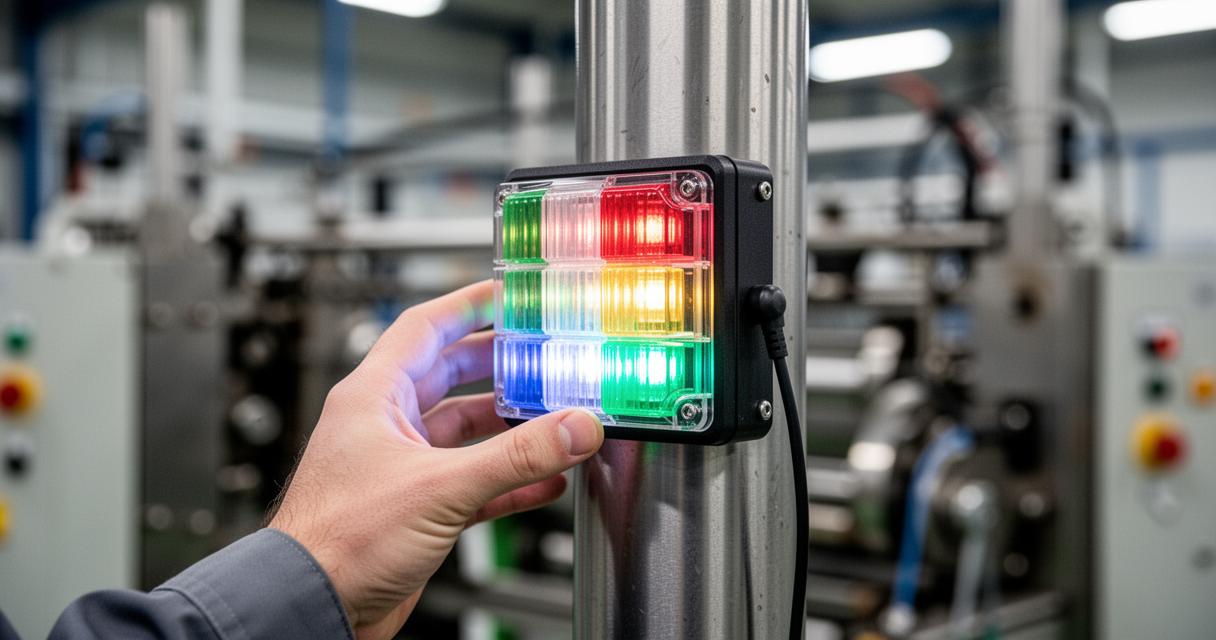
How digital display technology is replacing traditional static warning signs
Across industrial settings, digital signage is increasingly taking the place of static printed boards. Digital and interactive displays allow for instant updates to safety messaging without the need for physical replacement, which is particularly valuable in environments where hazards or workflows change frequently. Facilities such as distribution centres benefit from consistent safety visual guidance even as floor conditions or inventory layouts shift. Moreover, projected walkway systems using high-performance LED projectors offer vivid, maintenance-free pathways that significantly outlast traditional floor markings. These systems readily surpass the illumination requirements set by the Health and Safety Executive, which specifies minimum levels ranging from 50 lux to 750 lux depending on the area.
How Innovative Warning Signage Designs Are Raising the Bar for Workplace Safety
Preventing workplace accidents requires not only advanced technology but also thoughtful design informed by human behaviour. Modern approaches to industrial warning signage draw on decades of research into how workers perceive and respond to visual cues, ensuring that signs are immediately legible even under pressure or in low-light conditions.
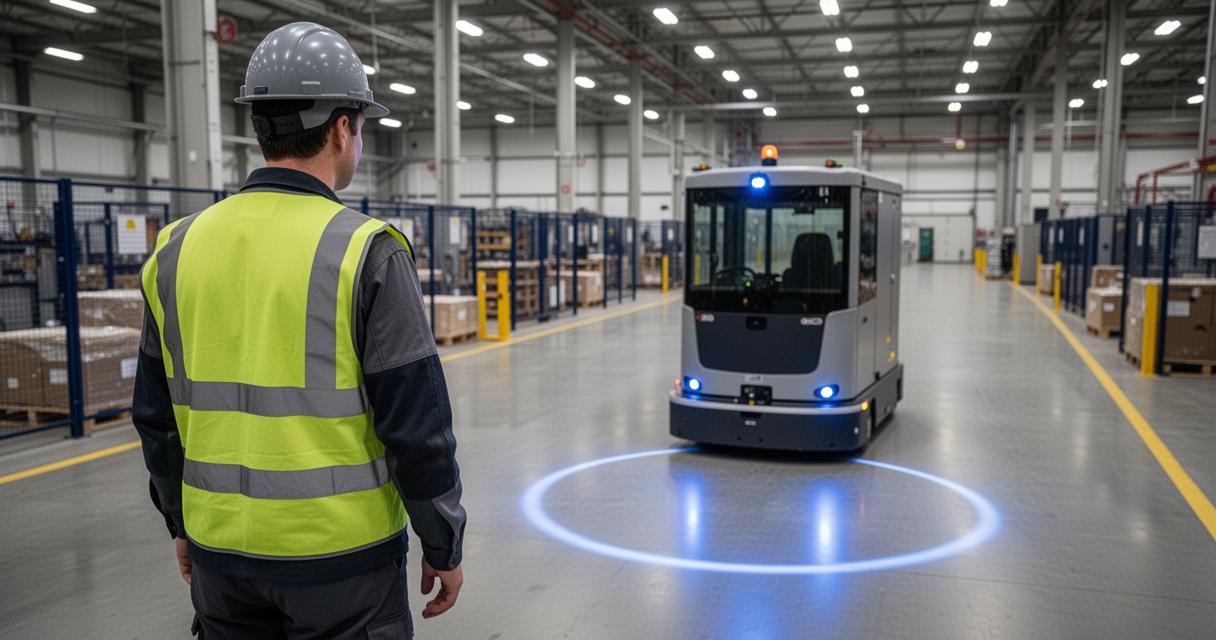
Material and visibility breakthroughs driving greater hazard awareness
The materials used in contemporary industrial facility management signage have evolved considerably. New weather-resistant plastics and reflective coatings are enhancing signage durability, ensuring that warnings remain legible across a wide range of environmental conditions. LED safety lighting integrated into floor projections and overhead displays provides consistent illumination that adapts to ambient light levels, further improving safety sign visibility. Glow-in-the-dark signs represent another practical innovation, offering guidance during power outages or low-visibility emergencies without requiring any external power source.
Colour coding remains a powerful tool, with red reserved for emergencies, yellow signalling caution, green indicating safe exits and blue denoting mandatory actions. These conventions, now embedded in standards such as ANSI Z535.1, help workers instinctively recognise the nature of a hazard and respond appropriately, reducing reaction times during critical moments.
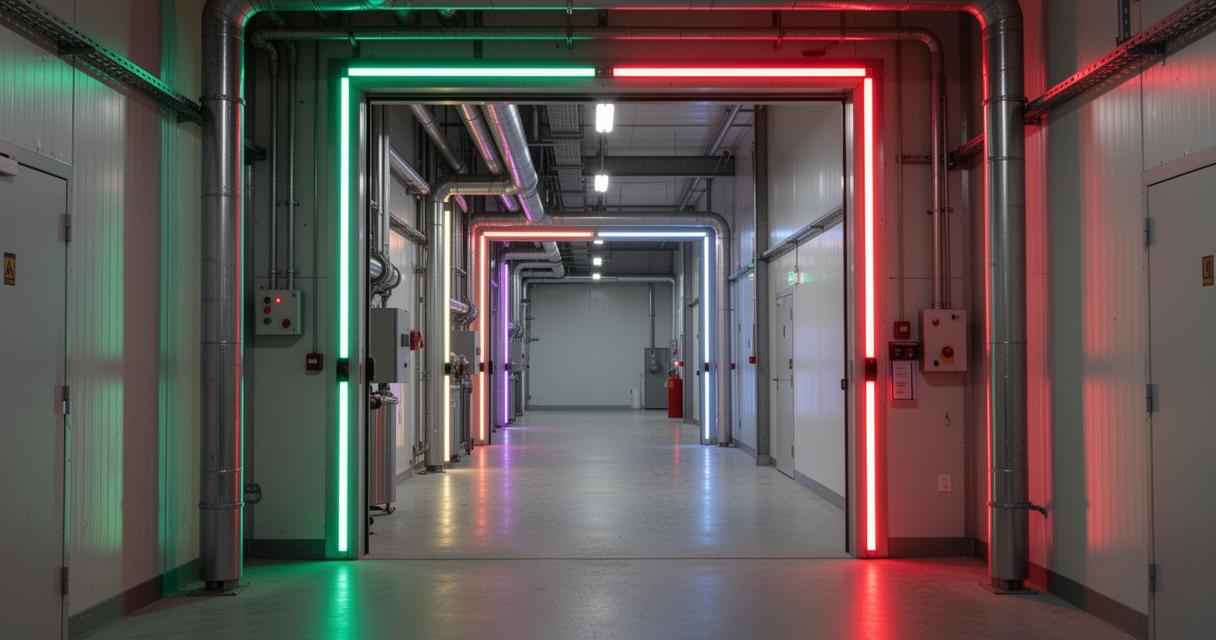
Standardisation and Human-Centred Design in Modern Industrial Warning Signage
Effective warehouse safety and broader industrial safety depend on signs that communicate clearly to every worker, regardless of language or literacy level. Regulatory frameworks including OSHA and EU directives have pushed organisations to adopt graphical symbols alongside concise, action-oriented text, improving universal comprehension. The shift towards human-centred design also encompasses floor markings that guide movement intuitively, reducing cognitive load in high-pressure situations.
Compliance and regulations continue to act as a powerful driver for upgrading signage infrastructure, with legal accountability increasing as outdated signs fail to meet current standards. Meanwhile, future opportunities in the sector point towards the use of augmented and virtual reality in worker training, eco-friendly materials, and ever-greater customisation, all serving the overarching goal of dynamic safety systems that protect people as effectively as possible in demanding industrial environments.