
Across Britain's evolving urban landscape, former factories and warehouses are experiencing a remarkable renaissance, emerging as some of the most captivating hospitality destinations in contemporary design. These industrial relics, once the beating heart of manufacturing towns and dockland districts, are being thoughtfully reimagined as lounges, restaurants, and cultural venues that honour their rugged past whilst embracing the comforts and aesthetics of modern living. The transformation represents far more than a simple change of function; it embodies a philosophy of sustainable architecture and cultural preservation that recognises the inherent value in what already exists.
The Evolution of Industrial Spaces: From Manufacturing to Modern Hospitality
The journey from production line to dining destination reflects broader shifts in how society values its architectural heritage. Throughout the twentieth century, Britain's industrial buildings served as the backbone of economic prosperity, housing everything from cotton mills to sugar refineries, from foundries to fabric factories. As manufacturing declined and relocated, these substantial structures faced an uncertain future. Rather than demolition, forward-thinking developers and designers began to recognise the potential within these robust shells. The thick walls, soaring ceilings, and honest materiality that once facilitated industrial processes now provide the perfect canvas for adaptive reuse, offering spatial qualities that new construction simply cannot replicate. This evolution has been particularly pronounced in regenerated docklands and former manufacturing districts, where entire neighbourhoods have been reimagined around their industrial bones.
Preserving architectural heritage whilst embracing contemporary design
Heritage preservation in factory conversions demands a delicate balance between respecting original features and introducing contemporary elements that serve modern hospitality functions. Successful warehouse conversion projects maintain the authentic character of their industrial origins through careful retention of structural elements such as concrete frames, exposed brickwork, cast iron columns, and original fenestration patterns. These features tell the story of the building's former life, creating a palpable connection to history that guests find deeply appealing. At the same time, contemporary design interventions must enhance comfort, functionality, and atmosphere without overwhelming the space's inherent character. This approach to architectural conservation recognises that buildings need not remain frozen in time to honour their past; rather, thoughtful minimalist intervention can highlight historic features whilst introducing the amenities expected in boutique hotels, restaurants, and cultural venues. The philosophy extends beyond aesthetics to embrace sustainable practices, as refurbishing existing structures typically requires fewer resources and generates less waste than new construction, making heritage preservation an environmentally sound choice.
The Rise of Warehouse Conversions in Britain's Urban Landscape
Urban regeneration through industrial refurbishment has become a defining characteristic of British cities over the past two decades. From repurposed swimming pools to transformed carpentry workshops, the diversity of original uses speaks to the versatility of industrial architecture. These conversions have become catalysts for broader neighbourhood transformation, often serving as anchor institutions in mixed-use developments that combine residential, commercial, and cultural programmes. The trend extends internationally as well, with notable examples including a former coal mine in Germany reinvented as office space, sugar factory warehouses in Lisbon converted for an IT company, and a cotton mill in France reimagined as a co-working space. In Lyon's Confluence district, a former sugar storehouse now operates as a large arts and music venue with a rooftop bar, demonstrating how industrial heritage sites can become destinations that draw visitors and revitalise surrounding areas. The success of these projects has established warehouse conversion as a proven model for cost-effective refurbishment that delivers both economic returns and community benefits.
Design elements that define factory lounge aesthetics
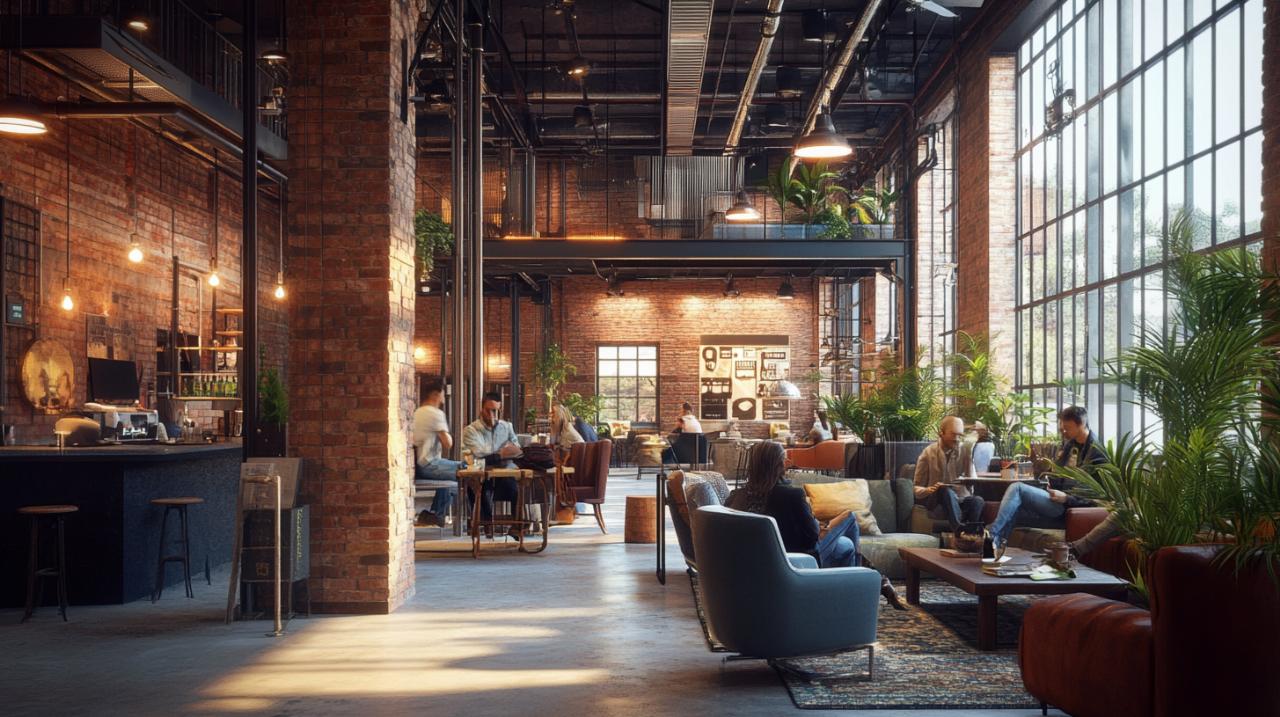
The distinctive atmosphere of factory lounges emerges from a carefully curated interplay between industrial authenticity and contemporary comfort. Designers working in these spaces draw upon the existing architectural vocabulary, allowing raw materials and structural honesty to inform the overall aesthetic direction. Exposed ductwork, unfinished concrete surfaces, and visible steel beams become design features rather than elements to conceal. This industrial chic approach celebrates the beauty inherent in functional forms, creating environments that feel both grounded in history and thoroughly contemporary. The palette typically emphasises natural materials and neutral tones, with warm wood elements and soft textiles providing counterpoints to harder industrial surfaces. Lighting plays a crucial role in these conversions, with designers often incorporating statement fixtures that reference industrial forms whilst providing the warm, layered illumination essential for hospitality settings. The spatial generosity afforded by high ceilings and open floor plates allows for flexible zoning, enabling single spaces to accommodate multiple functions from dining to events to gallery spaces.
Aluminium furnishings: marrying industrial authenticity with modern comfort
Aluminium has emerged as a material of choice in factory lounge interiors, offering a natural bridge between industrial heritage and contemporary hospitality design. Its inherent qualities of durability, lightweight construction, and clean aesthetic make it particularly well-suited to these contexts. Aluminium armchairs and tables bring a refined industrial sensibility that complements original architectural features without attempting to mimic historical forms. The material's subtle sheen and smooth surfaces provide visual contrast against rougher textures of brick, concrete, and weathered wood, creating dynamic compositions that engage the eye. Modern aluminium furniture also addresses practical hospitality concerns, offering easy maintenance, stackability for flexible space configuration, and resistance to the wear inherent in high-traffic venues. Designers specify aluminium pieces in various finishes, from brushed and polished to powder-coated options that introduce colour whilst maintaining the material's inherent character. These furnishings work equally well in both interior and exterior applications, making them ideal for factory conversions that incorporate rooftop venues or courtyard spaces within their programmes.
Vondom furniture: contemporary statement pieces in reclaimed spaces
Within the realm of contemporary furnishings suited to factory lounge environments, Vondom pieces have gained recognition for their bold formal language and innovative material applications. The brand's approach to furniture design emphasises sculptural qualities and vibrant possibilities that can energise industrial spaces without compromising their essential character. Vondom collections often feature organic forms and unexpected geometries that provide striking visual counterpoints to the orthogonal discipline of factory architecture. Their pieces, frequently crafted from advanced polymers and incorporating integrated lighting options, bring a distinctly contemporary sensibility that signals the building's transformation from production facility to hospitality destination. In factory lounges, these statement pieces often anchor specific zones within larger open spaces, creating focal points that guide circulation and define functional areas. The furniture's weather-resistant properties extend their utility to underground spaces and rooftop venues, whilst their bold presence can hold its own against the commanding scale of industrial architecture. When thoughtfully integrated, such contemporary furnishings demonstrate how repurposed buildings can accommodate cutting-edge design without sacrificing the atmospheric qualities that make these spaces compelling.
Culinary excellence within industrial architecture
The relationship between food and architecture takes on particular significance in factory lounge environments, where the spatial qualities of industrial buildings fundamentally shape the dining experience. High ceilings and generous floor plates allow for restaurant configurations that would be impossible in conventional buildings, enabling designers to create dramatic dining rooms that maintain intimacy through thoughtful spatial subdivision. The acoustic challenges presented by hard surfaces and large volumes require careful intervention, with designers employing sound-absorbing materials in strategic locations whilst preserving the essential character of exposed structure. Kitchen visibility has become a hallmark of many factory conversions, with open or partially open culinary operations that transform cooking into performance, allowing diners to engage with the craft and theatricality of food preparation. Seasonal cuisine finds a natural home in these settings, as the honest materiality and connection to craft inherent in industrial spaces resonates with contemporary dining philosophies that emphasise provenance, technique, and authenticity. The substantial infrastructure of factory buildings also accommodates ambitious culinary programmes, with robust floor structures capable of supporting extensive kitchen equipment and service areas.
How atmospheric design enhances the dining experience
Atmosphere in factory lounges emerges from the layering of sensory experiences, where architectural character provides the foundation upon which lighting, acoustics, materiality, and furnishings build to create memorable hospitality environments. The patina of age visible in weathered surfaces and vintage machinery adds depth and narrative that new construction cannot achieve, giving diners a sense of place and connection to local history. Natural light filtering through large industrial windows creates dynamic conditions that shift throughout the day, whilst carefully designed artificial lighting establishes warmth and intimacy as evening arrives. The interplay between preserved industrial elements and contemporary interventions generates visual interest that keeps spaces engaging through extended visits. Temperature and air quality, managed through sensitively integrated systems that respect architectural character, ensure comfort without compromising aesthetic integrity. These atmospheric qualities transform dining from mere sustenance into an experience that engages memory and emotion, creating the conditions for hospitality excellence.
Creating multi-sensory hospitality environments through thoughtful spatial planning
The most successful factory lounge conversions recognise that exceptional hospitality emerges from holistic spatial planning that addresses all aspects of the guest experience. Circulation patterns receive careful consideration, with designers creating intuitive pathways that guide visitors through spaces whilst revealing architectural features and framing views. Zoning strategies establish distinct areas for different activities and moods, from energetic bar environments to contemplative dining nooks, all within the cohesive framework of the industrial shell. Multidisciplinary venues that combine dining, arts centres, community hubs, and retail conversion demonstrate the versatility of factory spaces and their capacity to serve diverse programming. Material selections engage the sense of touch, with designers introducing warm, tactile surfaces that invite interaction alongside the cooler industrial finishes. Sustainability considerations extend beyond the inherent benefits of adaptive reuse to encompass operational practices, with many venues emphasising zero waste approaches and sustainable practices in both kitchen operations and overall facility management. These comprehensive design strategies, when executed with sensitivity to both heritage and contemporary needs, transform industrial relics into vital community assets and compelling hospitality destinations that honour the past whilst serving present and future generations.